Table of Contents
What Is This Book About?
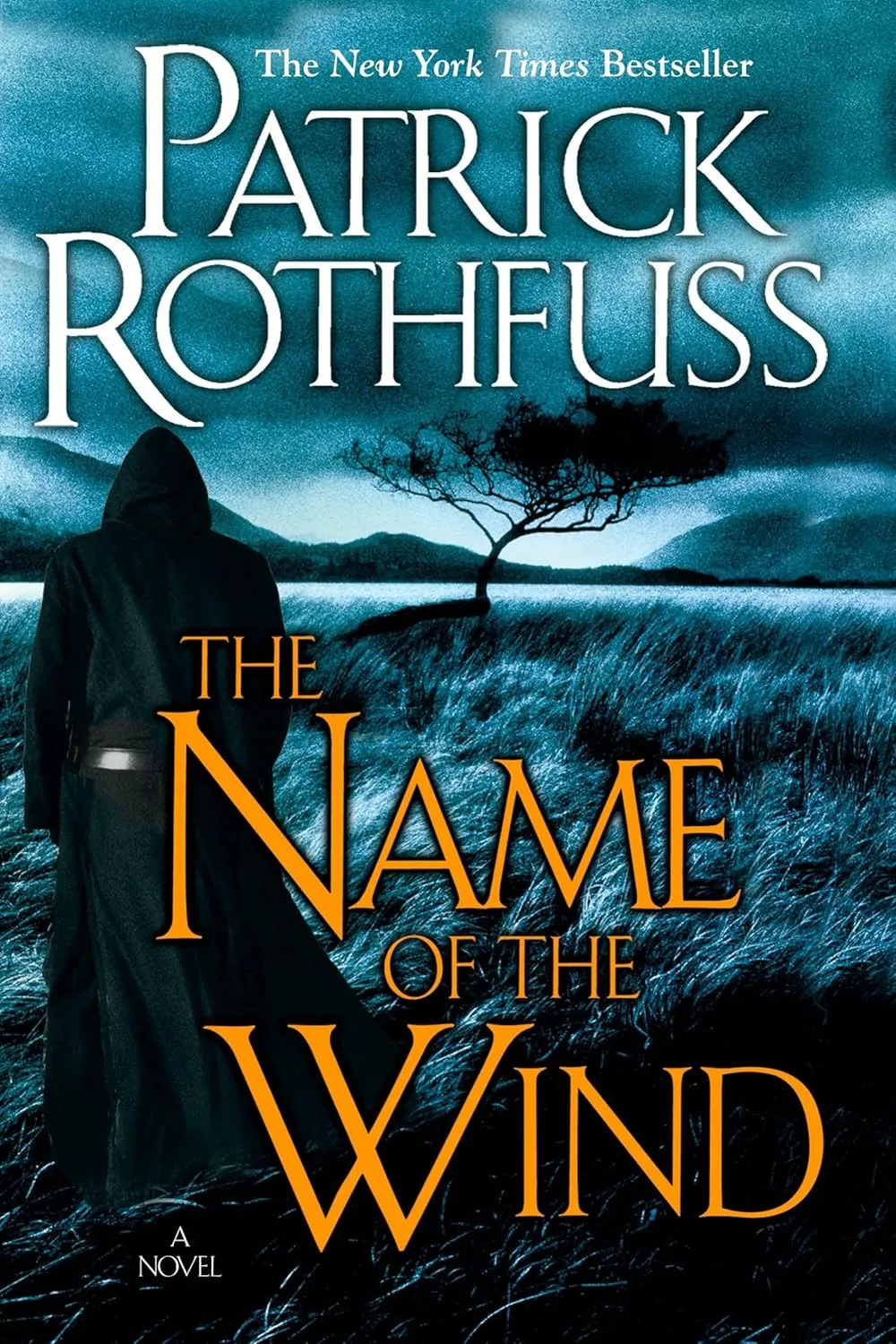
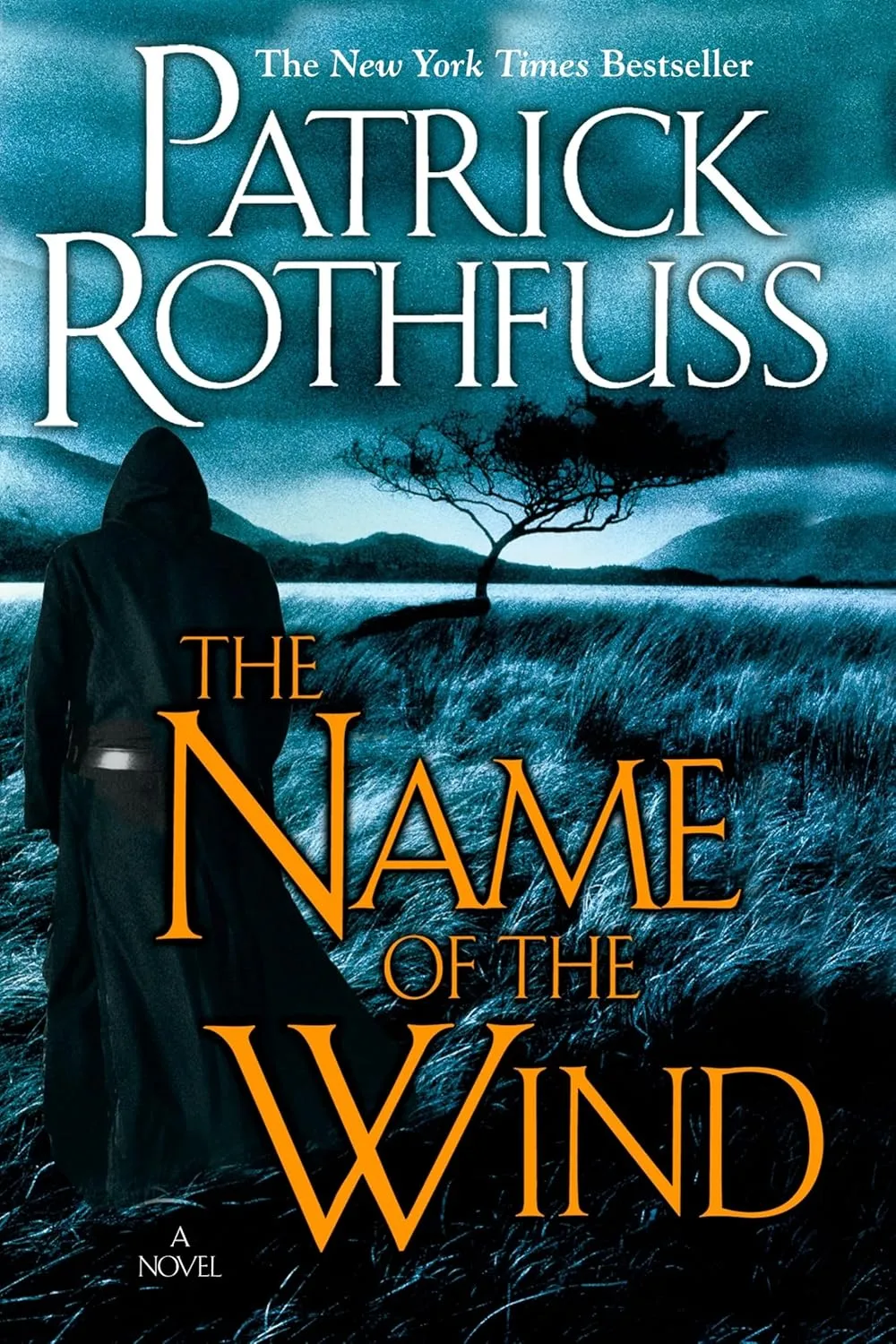
The Name of the Wind is the first installment in Patrick Rothfuss’s Kingkiller Chronicle trilogy, and in my opinion, it stands as one of the most beautifully written fantasy novels of the 21st century. The book tells the story of Kvothe, a legendary figure who has become a simple innkeeper, as he recounts his extraordinary life to a chronicler named Devan Lochees (known as Chronicler). It’s a story within a story—a frame narrative that weaves between Kvothe’s present-day life in hiding and his tumultuous past as a gifted young man pursuing magic, music, and revenge.
Key Details
- Author: Patrick Rothfuss
- Publication Year: 2007
- Genre: Epic Fantasy, Coming-of-Age
- Series: The Kingkiller Chronicle (Book 1 of 3)
- Page Count: Approximately 662 pages (hardcover)
- Setting: A richly detailed secondary world featuring the University (a school of magic), various kingdoms, and the mysterious Fae realm
Summary of the Book
The novel opens in the present day at the Waystone Inn, where Kvothe lives under the assumed name “Kote.” He appears to be an ordinary innkeeper, but when Chronicler arrives seeking the truth behind the legends, Kvothe agrees to tell his story over three days.
The bulk of the narrative takes us back to Kvothe’s childhood. Born into a troupe of traveling performers called the Edema Ruh, young Kvothe displays extraordinary talent for music and learning. His idyllic life is shattered when his entire troupe is murdered by the mysterious Chandrian—ancient, mythical beings that most people don’t even believe exist. Kvothe alone survives and spends three brutal years living on the streets of Tarbean, struggling to survive.
Eventually, Kvothe makes his way to the University, a prestigious institution where students study “sympathy” (a system of magic based on creating links between objects) and other arcane arts. Despite his poverty and youth, Kvothe gains admission and becomes the youngest student ever accepted. At the University, he makes friends and enemies, pursues knowledge about the Chandrian to avenge his family, and becomes infatuated with a mysterious and beautiful woman named Denna.
Throughout his time at the University, Kvothe faces numerous challenges: conflicts with wealthy students, particularly the arrogant Ambrose Jakis; financial struggles that force him to balance work with study; and his relentless quest to uncover information about the Chandrian and the Amyr (another mysterious group from history). The story weaves together Kvothe’s academic pursuits, his development as a musician and arcanist, his complicated relationship with Denna, and his deeper quest for vengeance and truth.
Main Lessons from the Book
1. The Power and Danger of Stories
As far as I can tell, one of the central themes Rothfuss explores is how stories shape reality. Kvothe’s life becomes legend, but the truth is often more complex and human than the myths suggest. The book teaches us that stories can both illuminate and obscure truth, and that the legends we create around people may have little to do with who they actually are.
2. The Cost of Obsession
Kvothe’s single-minded pursuit of knowledge about the Chandrian and his fixation on Denna demonstrate how obsession can consume a person. I believe Rothfuss is showing us that while passion drives achievement, it can also blind us to other important aspects of life and lead to destructive choices.
3. Knowledge Requires Sacrifice
From my perspective, the University sections of the book illustrate that true mastery demands tremendous sacrifice. Kvothe endures poverty, social humiliation, and physical danger in his pursuit of knowledge. The lesson seems clear: genuine expertise and understanding cannot be gained without paying a significant price.
4. Pride Precedes the Fall
Throughout the narrative, I consider Kvothe’s pride to be both his greatest strength and his most dangerous flaw. His confidence enables remarkable achievements, but it also creates enemies and leads to reckless decisions. It seems to me that Rothfuss is crafting a tragedy where we can already see the seeds of Kvothe’s downfall in his prideful nature.
5. Names Hold Power
The concept that learning the true “name” of something gives you power over it runs throughout the book. To me, this represents a deeper truth about understanding: when you truly comprehend the essence of something—whether it’s an element, an emotion, or even yourself—you gain the ability to shape it.
Best Quotes
“It’s like everyone tells a story about themselves inside their own head. Always. All the time. That story makes you what you are. We build ourselves out of that story.”
This quote, in my opinion, captures the book’s central meditation on identity and narrative.
“Words are pale shadows of forgotten names. As names have power, words have power. Words can light fires in the minds of men. Words can wring tears from the hardest hearts.”
This opening perfectly sets the tone for Kvothe’s character—talented, prideful, and haunted by his past.
“It had flaws, but what does that matter when it comes to matters of the heart? We love what we love. Reason does not enter into it.”
“When we are children we seldom think of the future. This innocence leaves us free to enjoy ourselves as few adults can. The day we fret about the future is the day we leave our childhood behind.”
Who Should Read This Book?
Perfect For:
- Fantasy lovers seeking rich world-building and complex magic systems
- Literary fiction readers who appreciate beautiful prose and don’t mind a slower pace
- Music enthusiasts who will appreciate the detailed attention to musical performance and composition
- Coming-of-age story fans who enjoy watching a character develop from childhood through young adulthood
- Readers who love frame narratives and stories about storytelling itself
Consider Before Reading:
I suppose I should mention that this book isn’t for everyone. If you prefer fast-paced action throughout, you might find some sections slow. The second book is published, but the third has been awaited for over a decade, which can be frustrating. The prose is beautiful but dense, requiring patience and attention. Additionally, some readers find Kvothe’s character too perfect or arrogant, though I believe this is intentional given the frame narrative structure.
Final Summary
The Name of the Wind is, from my perspective, a masterwork of fantasy literature that transcends typical genre boundaries. Patrick Rothfuss has crafted a story that operates on multiple levels: it’s an adventure, a mystery, a romance, a coming-of-age tale, and a meditation on the nature of storytelling itself.
What sets this book apart, as far as I can tell, is Rothfuss’s exquisite prose. Unlike many fantasy novels that prioritize plot over language, this book treats every sentence as important. The writing is lyrical, precise, and evocative. I guess you could say it reads more like literary fiction that happens to be set in a fantasy world.
The magic system is logical and well-developed, the world-building is immersive without being overwhelming, and the characters feel genuinely human despite the fantastical setting. I believe Kvothe is one of the most compelling unreliable narrators in modern fantasy—we’re constantly aware that he’s telling his own story, shaping it, perhaps embellishing or omitting details.
The frame narrative adds a layer of tragedy to everything. We know from the beginning that something has gone terribly wrong in Kvothe’s life, that the legendary hero is now a broken man in hiding. This knowledge colors every triumph and joy in the flashback narrative with bittersweetness.
It seems to me that the book’s main weakness is also one of its strengths: its deliberate pacing. Rothfuss takes his time, luxuriating in details of University life, musical performances, and character interactions. Some readers find this enchanting; others find it slow. I consider it essential to the book’s contemplative tone and its exploration of how we construct meaning from the events of our lives.
The Name of the Wind is ultimately a book about the gap between legend and reality, about how we tell stories to make sense of our lives, and about a brilliant young man’s first steps toward either greatness or ruin—we’re not yet sure which. For readers willing to invest in a slower, more literary fantasy experience, this book offers rewards that few others can match.